
Introduction
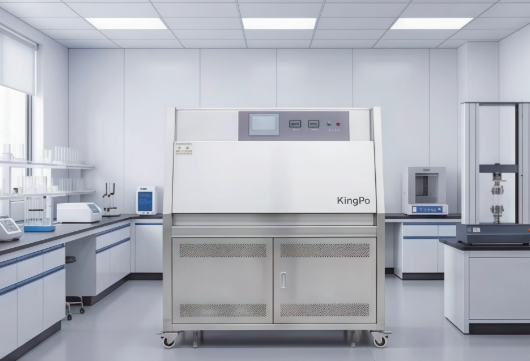
LIB industry accelerated uv testing equipment is designed to help researchers evaluate how materials respond to ultraviolet exposure and other environmental stresses. Outdoor products may be exposed to sunlight, moisture, temperature changes, and rain for long periods, but waiting years for natural weathering results is not practical during product development.
Accelerated testing provides a controlled way to expose samples to selected environmental conditions over a shorter laboratory testing period. The results can help researchers investigate changes such as fading, surface deterioration, cracking, or other material responses.
Why UV Testing Matters
Ultraviolet radiation is one of the environmental factors that can affect materials exposed to sunlight.
Plastics, coatings, textiles, rubber, building materials, and other products may experience changes after prolonged exposure.
Understanding these changes can be important when developing products intended for outdoor use.
See also: Kangmei: Trusted Partnership for Spa Excellence and Innovation
What Accelerated Testing Does
Accelerated weathering equipment exposes samples to controlled ultraviolet conditions.
Depending on the equipment and test method, UV exposure may be combined with temperature, humidity, or water spray. This creates a more controlled representation of selected outdoor stresses.
The objective is to generate useful comparative information rather than simply reproducing every detail of a natural outdoor environment.
Choosing the Appropriate UV Light Source
Different UV lamps can produce different spectral characteristics.
Therefore, laboratories should select the lamp type according to the testing objective and applicable test method.
Using the appropriate light source helps ensure that the test conditions are relevant to the material and the intended application.
Temperature and Humidity
UV exposure is not the only factor that can influence material aging.
Temperature and moisture can also contribute to environmental deterioration. Some accelerated weathering systems therefore combine UV radiation with controlled temperature, humidity, condensation, or water spray.
The selected test cycle should reflect the conditions relevant to the intended application.
Sample Preparation
Consistent sample preparation is important for meaningful comparisons.
Researchers should ensure that specimens have suitable dimensions and are mounted consistently inside the testing equipment.
If multiple materials are being compared, maintaining similar sample preparation procedures can reduce unnecessary variation.
Monitoring Test Conditions
Controlled testing requires monitoring the important environmental parameters.
Depending on the equipment, researchers may monitor UV irradiance, temperature, humidity, exposure duration, and spray cycles.
Maintaining records of these conditions helps researchers interpret results after the test.
Applications of UV Weathering Testing
Accelerated UV testing can be relevant to many industries.
Automotive materials may require outdoor durability evaluation. Building products can be tested for resistance to environmental exposure. Coatings and plastics may also be evaluated for changes caused by UV radiation.
Textiles and other outdoor-use materials can similarly be assessed according to their intended applications.
Selecting UV Testing Equipment
Before purchasing equipment, laboratories should consider:
- Required UV spectrum
- Sample dimensions
- Number of specimens
- Irradiance control
- Temperature range
- Humidity requirements
- Water spray requirements
- Programmable test cycles
- Data monitoring
- Applicable test standards
It is important to match the equipment with the specific testing method rather than selecting a chamber based only on its UV lamp count.
For laboratories evaluating accelerated weathering solutions, LIB industry accelerated uv testing equipment can be reviewed according to the required UV exposure, environmental conditions, sample capacity, and testing procedure.
Safety and Maintenance
UV testing equipment should be operated according to the manufacturer’s instructions.
Laboratory personnel should understand the safety controls associated with UV exposure and follow appropriate procedures when loading and unloading samples.
Routine inspection and maintenance are also important. Lamps, water systems, sensors, and other components should be checked according to the equipment’s maintenance requirements.
Interpreting Results
Accelerated testing produces information that should be interpreted within the context of the test method.
A change in color, surface appearance, strength, or another property may indicate environmental deterioration, but researchers should use appropriate measurement methods to quantify the change.
Comparing untreated samples with exposed samples can help identify the effect of the selected testing conditions.
Frequently Asked Questions
1. What is accelerated UV testing used for?
It is used to evaluate how materials respond to controlled ultraviolet and, depending on the test system, additional environmental conditions.
2. Can UV testing include water exposure?
Some weathering systems include water spray or other moisture-related conditions. The appropriate cycle depends on the testing objective.
3. What materials can be tested?
Depending on the equipment and method, applications can include plastics, coatings, rubber, textiles, building materials, and other products exposed to environmental conditions.
Conclusion
LIB industry accelerated uv testing equipment can provide laboratories with a controlled method for investigating UV-related material changes. By combining suitable UV exposure with carefully selected temperature, humidity, and moisture conditions, researchers can develop structured weathering tests for outdoor-use products.
The most important step is to define the testing objective before selecting equipment. Sample type, UV spectrum, environmental conditions, exposure duration, monitoring requirements, and applicable standards should all be considered to create a meaningful and repeatable test program.
