
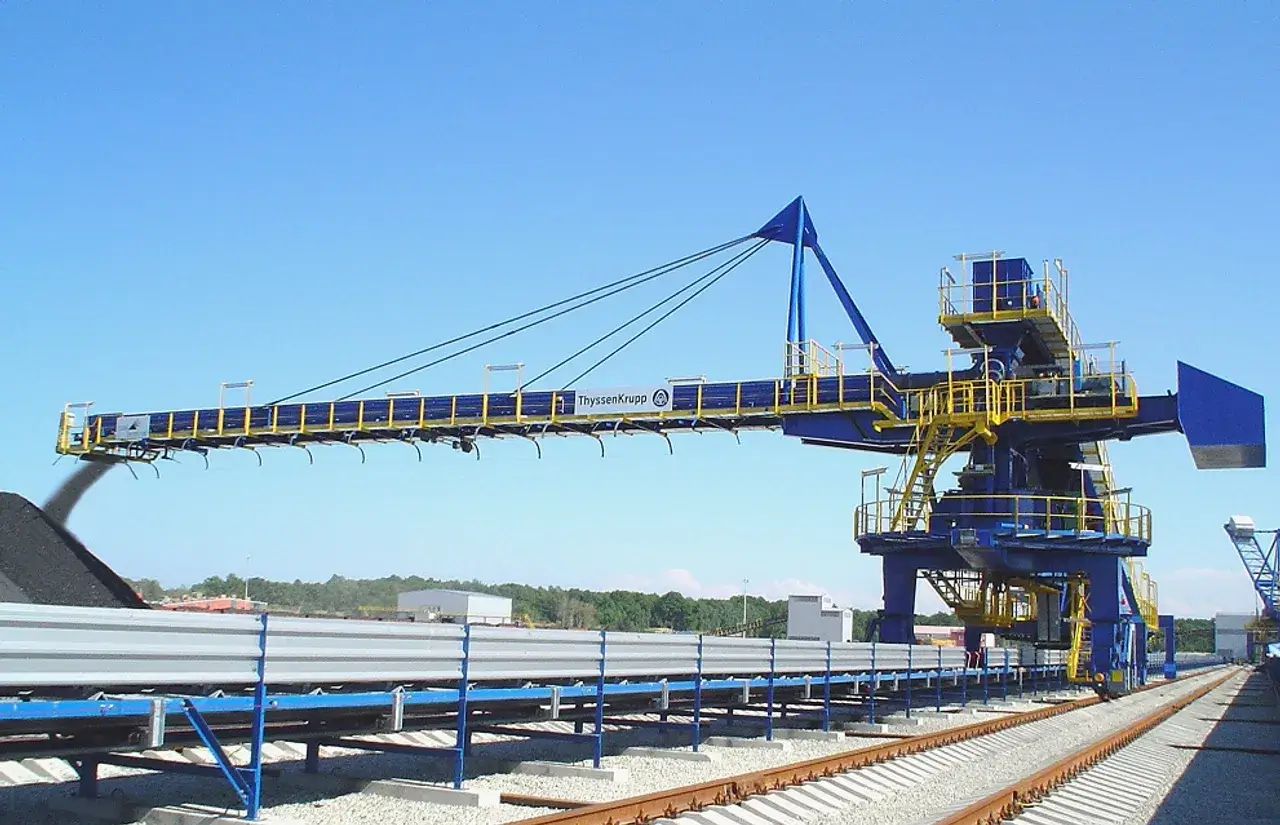
Stacker reclaimers are large machines designed for demanding material-handling operations. Their rotating structures require mechanical components capable of supporting substantial loads while allowing controlled movement.
The rotational support system is therefore an important part of the machine’s mechanical design. Selecting an appropriate bearing requires careful evaluation of loads, dimensions, operating conditions, and maintenance requirements.
Read Also: Maintaining Consistent Standards in Modern Printing
Begin With Machine Specifications
The first step is collecting accurate information about the equipment.
Engineers should identify:
- Maximum structural load
- Working load
- Rotation speed
- Operating cycle
- Mounting dimensions
- Gear arrangement
- Environmental conditions
- Expected service life
These specifications provide a foundation for evaluating suitable rotational components.
Consider Combined Loads
Large rotating structures can generate several types of mechanical loads simultaneously.
Radial and axial loads may occur alongside overturning moments. Dynamic effects from starting, stopping, material movement, and changes in operating conditions can also influence the bearing.
A complete load assessment is therefore preferable to selecting a component based on one rating alone.
Environmental Conditions
Material-handling equipment can operate in environments containing significant levels of dust and debris.
Moisture, temperature changes, vibration, and outdoor exposure may also affect mechanical components.
Bearing sealing, lubrication, material selection, and maintenance procedures should be appropriate for the installation environment.
Gear and Drive Compatibility
The bearing may form part of a larger slewing drive arrangement.
If the bearing includes gear teeth, the mating pinion must be compatible with the gear geometry. Correct mounting and alignment are necessary to achieve appropriate tooth contact.
The motor, gearbox, pinion, bearing, and supporting structure should be considered together during system design.
Mounting Structure
The bearing transfers loads between the rotating and stationary structures, so the mounting arrangement is critical.
Mounting surfaces should provide adequate support and dimensional accuracy. Fasteners should be selected and installed according to the applicable engineering requirements.
Poor mounting conditions can affect load distribution and accelerate wear.
Lubrication Planning
Large industrial bearings require suitable lubrication to support reliable movement.
Maintenance teams should establish a lubrication schedule based on manufacturer recommendations, operating conditions, and equipment usage.
Lubrication points should be accessible enough for routine servicing.
Maintenance Accessibility
A component may be technically suitable but difficult to maintain if inspection or lubrication points are inaccessible.
During equipment design or replacement planning, engineers should consider how technicians will access the bearing, gear, seals, fasteners, and related components.
Good maintenance access can simplify future servicing.
Replacement Considerations
When an existing component needs replacement, engineers should first document the current dimensions and mounting arrangement.
The replacement should match the required mechanical and installation characteristics rather than being selected solely by appearance or nominal size.
Measurements and technical drawings can help reduce the risk of installation problems.
For companies evaluating a rotational component designed for material-handling machinery, a slew bearing for stacker reclaimer can be assessed according to the application’s load, dimensions, gearing, mounting, and environmental requirements.
Commissioning After Installation
After installation, commissioning should include appropriate checks of mounting, alignment, lubrication, gear engagement, rotation, and operating conditions.
Initial monitoring can establish a useful baseline for future maintenance.
Any unusual noise, vibration, temperature, or movement should be investigated according to the equipment’s maintenance procedures.
Long-Term Maintenance
Maintenance should combine scheduled inspections with condition monitoring where appropriate.
Teams can maintain records of lubrication, inspections, repairs, vibration observations, gear condition, and replacement history.
This information can help identify recurring issues and support future maintenance planning.
FAQs
What factors matter when selecting rotational support for a stacker reclaimer?
Important factors include load capacity, dimensions, rotation speed, mounting arrangement, gear configuration, environmental conditions, lubrication, and maintenance access.
Why is gear compatibility important?
The bearing gear and mating pinion must work together correctly to transmit rotational force. Poor alignment or unsuitable geometry can increase wear and mechanical stress.
What should be checked after installation?
Mounting, alignment, lubrication, gear engagement, rotation, and initial operating behavior should be checked according to the applicable installation and commissioning procedures.
Conclusion
Selecting rotational support for a stacker reclaimer requires a complete understanding of the machine’s mechanical and operating conditions. Load analysis, environmental protection, mounting accuracy, gear compatibility, lubrication, maintenance access, and replacement planning all contribute to a suitable system. Careful engineering from selection through commissioning can help support dependable operation in demanding material-handling environments.
